
How Do I Stop My Dog Pulling On The Lead
When you have experienced a "pully dog" on a walk, you know how stressful it can be. Just walking a few metres can feel like a full body workout! And whilst you love your dog, it can feel like you are being dragged into battle on a runaway chariot! There Few things spoil a walk faster than a dog dragging you down the pavement.
It doesn't matter whether you have a career goofy cuddle monster at home or a hyperactive crazy spaniel , for some reason on walks their energy changes and you are the unwilling passenger at the other end of the lead. How to stop your dog pulling on the lead is the same principle and comes from the same motivation as this blog explores.
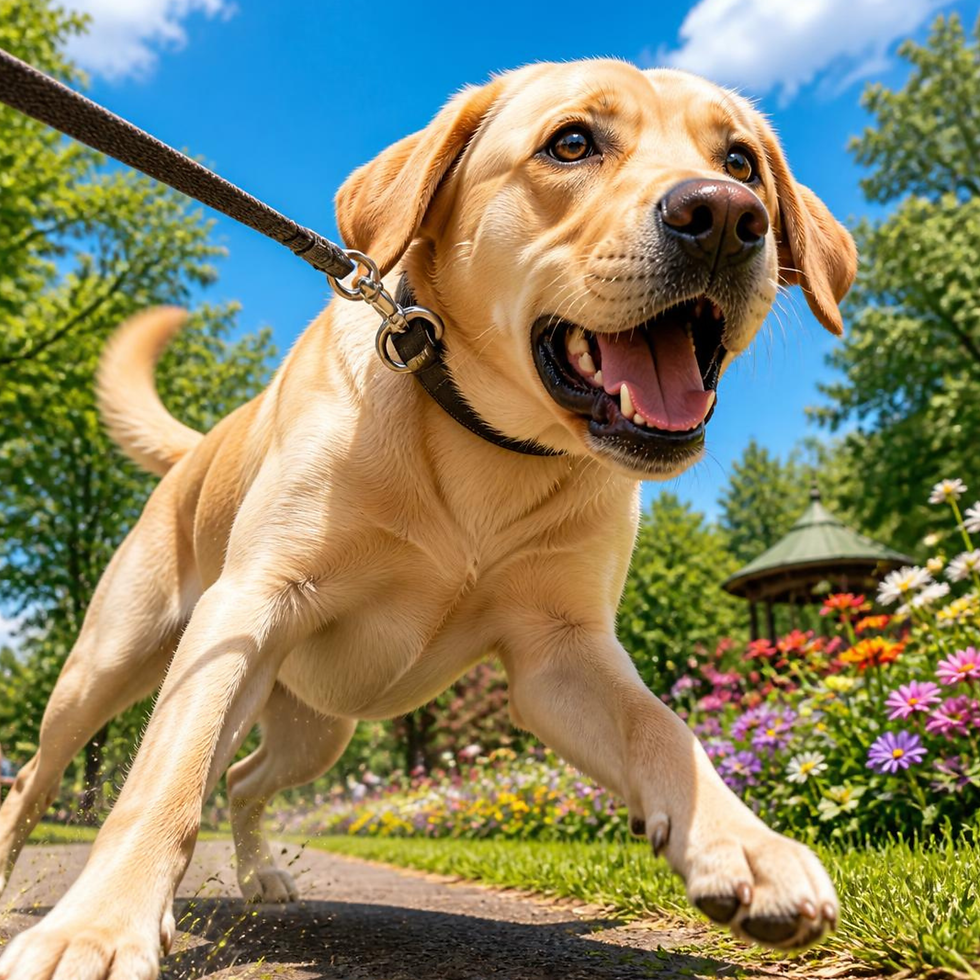
Whether you have an enthusiastic puppy or an adult dog that's been pulling for years, you're not alone. Did you know that pulling on the lead is one of the most common reasons owners seek help from a dog behaviour consultant.
I hear you saying, "Thats all very well, Victoria. It might be the most common problem, but what is the best fix?"
The good news? You can have a companionable stroll with your dog! There is a way forwards and your dog isn't being stubborn or trying to dominate you.
Pulling is a behaviour that has often been accidentally rewarded.
Lets look into this more.....
Why Do Dogs Pull on the Lead?
One of the most common reasons why dogs pull on the lead is, because to them, it works.
They want to get somewhere, so they pull towards it and hey presto, they are there! Reaching their point of interest then becomes the reward for pulling and before you know it you have reinforced this principle on every walk. Pulling becomes a learned behaviour. Pulling moves them closer to things they enjoy.
Dogs experience the world differently to humans. Whilst, we explore with our eyes, dogs follow scents. A walk is their opportunity to gather information, investigate scents and interact with their environment. Naturally, they often want to move faster than we do and follow whichever direction their nose takes them. This is a natural behaviour for dogs.
Excitement can also play a big role. Overstimulation and an inability to moderate their own energy expression is a common factor. Walks for dogs can often be incredibly stimulating in comparison to their lives in the home. Dogs that exist with fewer oppotunities to express natural and normal behaviours and use their brain in the home often have a disproportionate reaction and overstimulation at the idea of going on a walk. In short, their energy and stimulation peaks at times, as opposed to a gentle wave.
Dogs are naturally curious and use their nose on walks, which releases adrenaline and dopamine. Dopamine is an extremely addictive hormone, so dogs are highly motivated to repeat the circumstances that lead to the experience of those emotions and feelings that arose as a result of the dopamine in the system. So when the initial cue for the commencement of a walk occurs (getting a lead, their owner saying "walkies" etc), their arousal begins to climb dramatically and therefore their behaviour becomes more energetic and it becomes difficult for them to control their impulses.
Some dogs pull because they have never been taught how to walk on a loose lead. Puppies aren't born knowing they should stay close to us, and adult dogs adopted later in life may have years of practising pulling without realising there's another way to behave. We have to teach them that being in our zone leads to good things.
Breed traits can influence pulling too. Sporting breeds, scent hounds, terriers and working dogs are often naturally driven to explore, follow scents or move with purpose. While this doesn't mean they can't learn loose lead walking, it may mean they need more patience, consistency and opportunities to satisfy these natural instincts in appropriate ways.
Finally, the equipment you use can affect how comfortable your dog feels, but no collar or harness will teach loose lead walking on its own. Training is still essential. The goal isn't to stop your dog from enjoying their walk, it's to teach them that walking with a relaxed lead is what allows the adventure to continue.
In fact, the wrong equipment and handling can increase pulling and lead to other behavioural issues such as reactivity. Equipment that punishes pulling such as e-collars, choke chains, slip leads and prong collars cause fear and anxiety reactions in dogs as a result of pain, which can result in reactivity towards other dogs and humans, lunging and learned helplessness.
The encouraging news is that because lead pulling is a learned behaviour, it can also be replaced with a better one. With reward-based training, consistency and realistic expectations, most dogs can learn to walk calmly without pulling.
Is Pulling on the Lead Normal?
Yes. Absolutely! Your dog is excited to explore! Lunging on the lead is a little different though, depending on the trigger and the environment. Lunging and pulling are two different things depending on the context.
Lead pulling is completely normal dog behaviour. Puppies aren't born knowing how to walk beside us.
Loose lead walking is a learned skill, not an instinct.
That's why patience and training are far more effective than punishment.
What Is Loose Lead Walking?
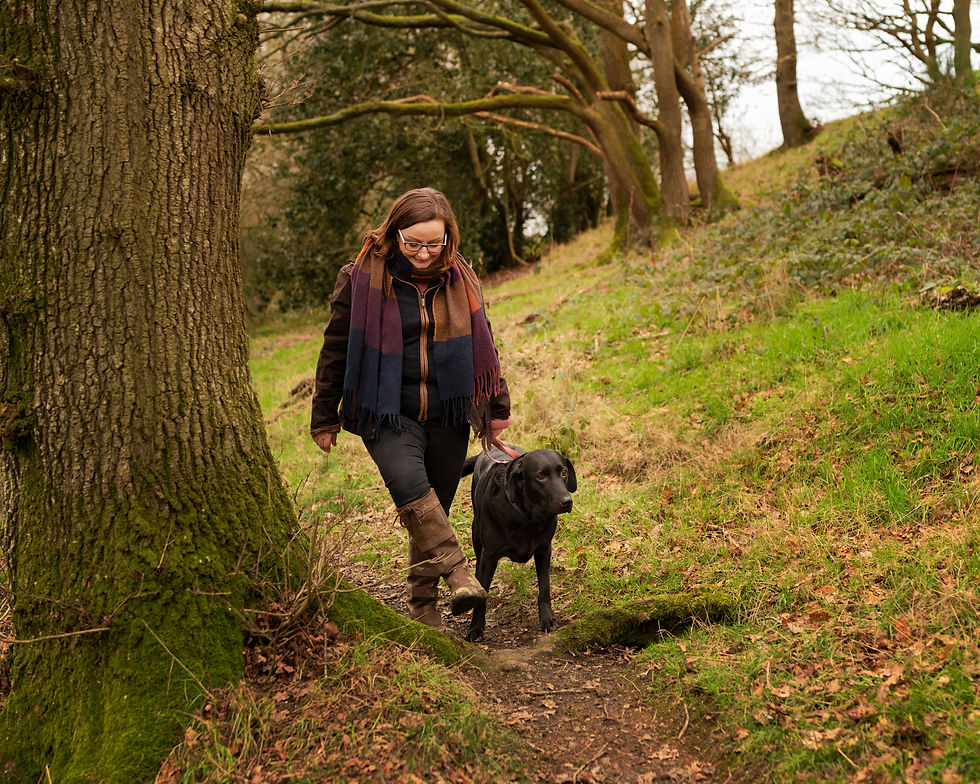
Loose lead walking simply means your dog walks without creating constant tension on the lead.
This doesn't mean your dog must walk perfectly beside your leg like a competition obedience dog.
If you want to experience a gentle companionable stroll with your dog, obedience heelwork leans more towards "robot dog" and the removal of choice and enjoyment from walks as opposed to allowing your dog the enjoyment of the adventure. I will often say to dog guardians that I don't personally "do robot dog" in the way I help people and their dogs with leadwork as I feel that the removal of choice and natural exploring behaviours affects the dog's welfare.
On loose lead walks your dog can
Walk slightly ahead
Stop to sniff
Change sides
Explore safely
...while keeping the lead relaxed most of the time.
A loose lead creates calmer, safer and more enjoyable walks for both of you.
How to Stop Your Dog Pulling on the Lead
Its important to recognise that there is definitely NOT a one size fits all approach to teach loose lead walking. There are so many things that intricately influence a behaviour and I would always say that it is better to book an appointment with me first to help you identify a pathway forwards that suits your dogs individual needs.
Heres what to consider in how to stop your dog pulling on the lead
1. Use the Right Walking Equipment
No piece of equipment teaches loose lead walking on its own, but the right setup makes learning much easier.
A comfortable Y-shaped harness that allows free shoulder movement, combined with a standard fixed lead of around 1.8–2 metres, gives your dog room to move naturally while keeping them comfortable. The harness should provide a large area of contact in the form of a breast plate to avoid intense pressure on any one point of your dogs anatomy.
Avoid retractable leads during training as they teach dogs that constant tension is normal. They can also result in injury as the application of a sudden break stop can jerk muscles, joints and bones.
2. Reward the Behaviour You Want
Instead of waiting for your dog to pull, reward them before they do.
Whenever your dog chooses to:
Look at you
Walk beside you
Slow down
Return towards you
mark the behaviour with praise or a reward and continue walking.
Dogs repeat behaviours that earn good outcomes.
3. Make Yourself More Interesting
Remember that your environment is competing for your dog's attention. This has to be applied carefully. For dogs that are overstimulated, easily excited, or heavily food motivated how you behave and the rewards you use will increase the energy in the situation and decrease your dogs ability to use their thinking brain and they will be unable to learn. How you approach this, depends on the dog, which is why it is always better to engage my services to help you make the right choice in your methods according to your dogs behaviour.
You can try:
Praise
Food rewards
Toys
Changes of direction
Happy conversation
to encourage your dog to stay engaged with you.
Remeber, walking together should feel rewarding, not restrictive.
5. Practise Somewhere Easy First
Many owners begin training in the busiest place possible. This is asking too much of your dog. Their thinking brains are often completely switched off even before you have had chance to teach.
You should never test a behaviour before it is ready to increase environmental distractions.
Instead, start somewhere with fewer distractions:
Your garden
Driveway
Quiet street
Empty park
Once your dog succeeds there, gradually introduce more challenging environments.
Training should become harder in small steps, not all at once.
6. Allow Plenty of Sniffing: The Sniffari Walk
Many owners unknowingly rush every walk.
Sniffing is incredibly important for dogs.
Research suggests sniffing helps dogs gather information, solve problems and may even promote emotional wellbeing.
Allowing regular sniff breaks often reduces frustration, making loose lead walking easier overall. This also affects the feel of the walk. If walks start to feel more like a gentle wander, your dogs energy will start to match the walk.
Remember, not every walk has to be about exercise. Some walks are simply for exploration.
Common Mistakes That Make Pulling Worse
Being inconsistent
Walking too far too soon
Start to think of walks as training sessions instead of walks.
Expecting perfection immediately
Loose lead walking develops gradually through hundreds and hundreds of successful repetitions.
Only rewarding with food
Food is useful, but access to sniffing, play and moving forward can also become valuable rewards.
How Long Does It Take to Stop Lead Pulling?
Erm......dealing with an individual being, especially one of a different species that varies so much genetically due to the variety of breeds available, makes this an impossible question to answer. How much work and consistency are you willing and able to put into teaching your dog?
Frequently Asked Questions
Why does my dog pull more at the start of a walk?
Dogs are often excited when they first leave the house. Spending a minute allowing calm sniffing before beginning structured walking can help reduce excitement.
Does my dog pull because they're dominant?
No. Modern behavioural science has moved away from dominance-based explanations for everyday behaviours like lead pulling, in fact dominance theory has been disproven in both the dog world and the wolf world, it does not exist. Dogs pull because they want to move towards something rewarding and may be overstimulated and over energised.
Should I use a slip lead?
No. Definitely not. Ask yourself is it fair to punish a child for doing the wrong behaviour, when in fact, you have never taught them the right behaviour?
They punish a dog by causing pain and pinching if a dog pulls. This can lead to fear and anxiety on walks which can intensify the problem or cause a new problem like aggression and reactivity.
Can older dogs still learn?
Absolutely. Dogs of any age can learn new behaviours with consistent, reward-based training.
Final Thoughts
Teaching your dog to walk on a loose lead isn't about controlling them, it's about building communication and trust. You are your dog's advocate and confidence giver. Teaching your dog to exist in the human world, should always be about building their confidence in you to protect them, guide them and love them.
Remember that your dog isn't trying to annoy you. They're simply doing what has worked in the past.
With patience, consistency and reward-based training, walks can become calmer, safer and far more enjoyable for both ends of the lead.
If you're struggling despite practising regularly, I can work with you to assess why your dog is pulling, the external factors that are triggering the behaviour and propagating it and teach you to understand what your dog is communicating and motivated to do. I can help you with methodology tailored to you and your dog and train, teach and nurture
You can book a free 15 minute consultation with me here


Comments